
Journal
American Mahjong Playing Pace and Table Etiquette

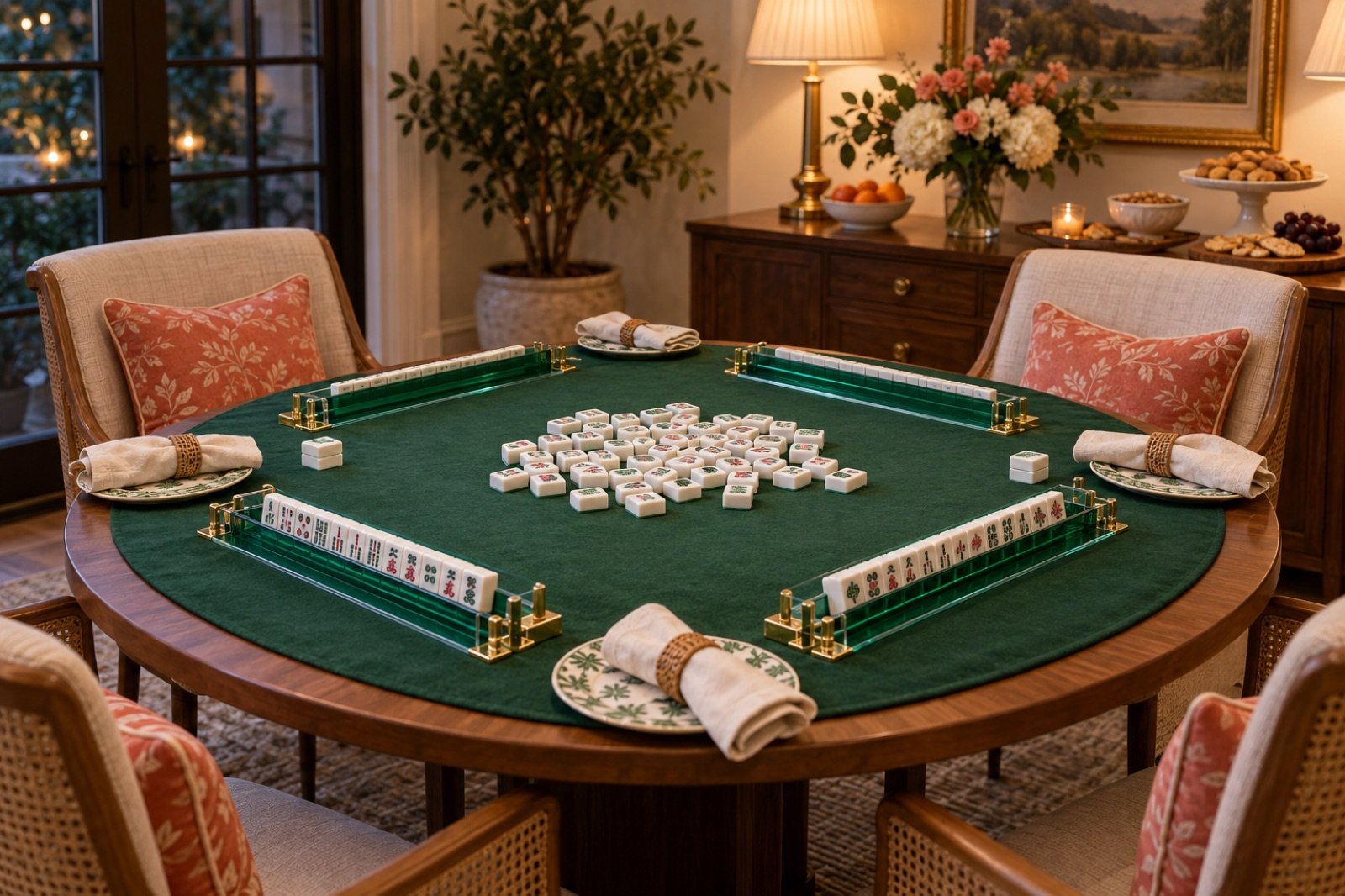
Good Mahjong etiquette protects both the game and the gathering. Players need enough time to read the card and make decisions, while the table also benefits from a steady rhythm and clear actions.
Agree on the session type before play, name discards clearly, pause long enough for calls, keep exposures readable, avoid coaching an active hand without permission, and adjust pace to the least experienced invited player.
Name the kind of game
A lesson, relaxed social table, weekly established game, and tournament practice have different pace expectations. Tell invitees which one they are joining. Beginners can then ask questions without feeling they are delaying a fast table.
If the group uses scoring, table stakes, or house procedures, explain them before the first wall.
Make every action clear
Name each discard audibly and place it where all players can see. Pause before the next draw so others have a fair opportunity to call. Announce exposures and joker exchanges in simple language.
Avoid touching the next tile while another player's action is unresolved.
Support beginners without playing for them
Answer a focused rules question, then let the learner choose. Constantly pointing at a card line or reaching into another person's rack removes the very decision practice they need.
Agree whether open coaching is welcome. Some learners want a guided game; others prefer to ask only when stuck.
- State the session pace
- Call discards clearly
- Allow a fair response pause
- Keep exposures orderly
- Ask before coaching
- Keep food and phones away from play
Handle equipment considerately
Keep drinks on a side surface, place tiles rather than throwing them, and use a mat when noise or furniture protection matters. Return racks and accessories to their cases after the game.
If using another person's set, ask before cleaning, labeling, or rearranging storage components.
Resolve rules without tension
Stop the action, identify the exact question, and consult the current card or agreed rules reference. Separate an official rule from a house preference. If the answer remains unclear, choose a temporary table ruling and research it after the game.
The goal is a fair outcome and a table people want to return to.
Frequently asked questions
How fast should an American Mahjong game move?
Pace should match the announced session type and experience level. A beginner table needs more card-reading time than tournament practice.
Should you say the name of every discard?
Yes. Calling the discard clearly helps every player follow the action and respond fairly.
Is it polite to help another player's hand?
Ask first. Teaching tables may welcome guidance, while ordinary play usually leaves decisions to each player.
Reviewed for clarity and accuracy in September 2026.