
Journal
Mahjong Mat Materials Compared

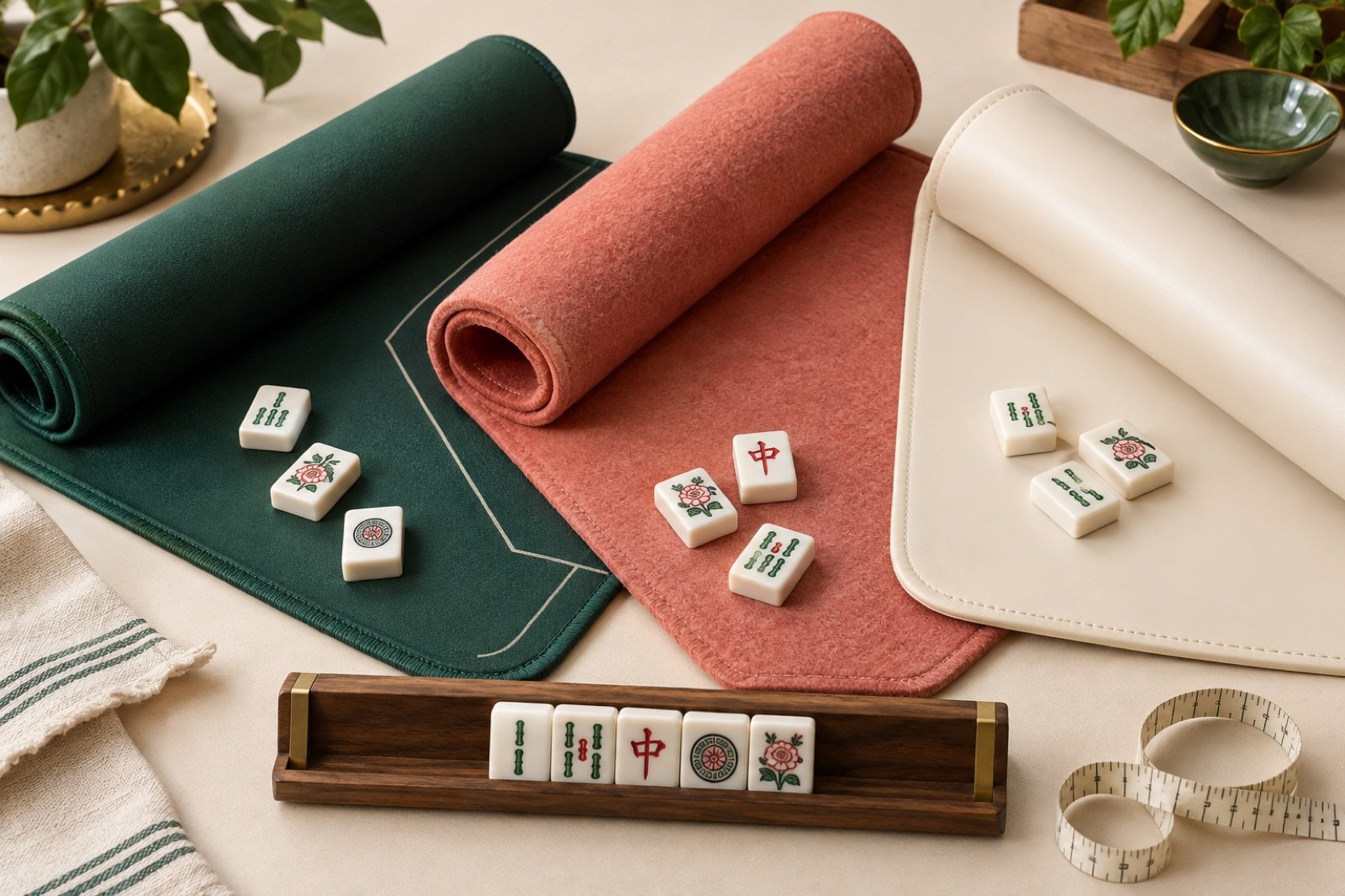
Mahjong mat materials change the sound, speed, grip, weight, and storage behavior of the table. The best surface is the one that matches how your group shuffles, travels, cleans, and plays.
Cushioned rubber-backed mats usually offer grip and sound reduction; felt is light and quiet but may shift; woven fabric can feel refined but depends on backing; smooth coated surfaces clean easily but may be faster and louder. Check the actual construction, not only the product category.
Cushioned rubber-backed mats
Neoprene-style or similar cushioned mats tend to stay in place and soften tile noise. Their thickness can make shuffling comfortable, but they may be heavier and create a larger roll for travel.
Check edge stitching, odor on arrival, and whether the maker recommends rolling in one direction. Do not assume every rubber-backed material can be machine washed.
Felt and wool-blend surfaces
Felt is light, quiet, and easy to fold or roll. Thin felt can drift on a smooth dining table and may wrinkle under a rack. Denser felt feels more stable but can attract lint and require careful brushing.
A separate non-slip underlay can improve stability, though it adds another item to the travel kit.
Woven fabric and quilted mats
Woven surfaces can offer beautiful texture and a softer residential look. Performance depends on the backing and weave: loose texture may catch tile edges, while a tightly woven top supports smooth movement.
Quilting adds cushion but can create ridges. Review close-up photos and ask whether the center play area is flat.
Smooth coated surfaces
Coated or synthetic leather-like mats wipe clean easily and can pack compactly. Tiles may move faster and sound sharper than on cushioned fabric. Glossy finishes can reflect overhead light.
If you prefer a smooth surface, choose a matte finish with enough underside grip to prevent the entire mat from sliding.
- Grip on the table
- Tile movement speed
- Sound reduction
- Cleaning method
- Rolled diameter and weight
- Glare and printed design
Choose based on real use
For apartments and shared lounges, prioritize sound and grip. For flights, prioritize weight and compact rolling. For frequent hosting, prioritize easy cleaning and a surface that lies flat quickly. No material wins every category, so rank the two qualities your group notices most.
Frequently asked questions
What Mahjong mat material is quietest?
Cushioned and felt-like surfaces generally reduce clatter better than thin hard-coated surfaces, though thickness and backing matter.
Which Mahjong mat is best for travel?
A light mat that rolls compactly and lies flat quickly is practical, provided it still offers enough grip and playing area.
Can Mahjong mats be machine washed?
Only if the maker specifically allows it. Backings, prints, stitching and adhesives can require spot cleaning instead.
Reviewed for clarity and accuracy in September 2026.