
Journal
What Fits in a Mahjong Travel Bag?

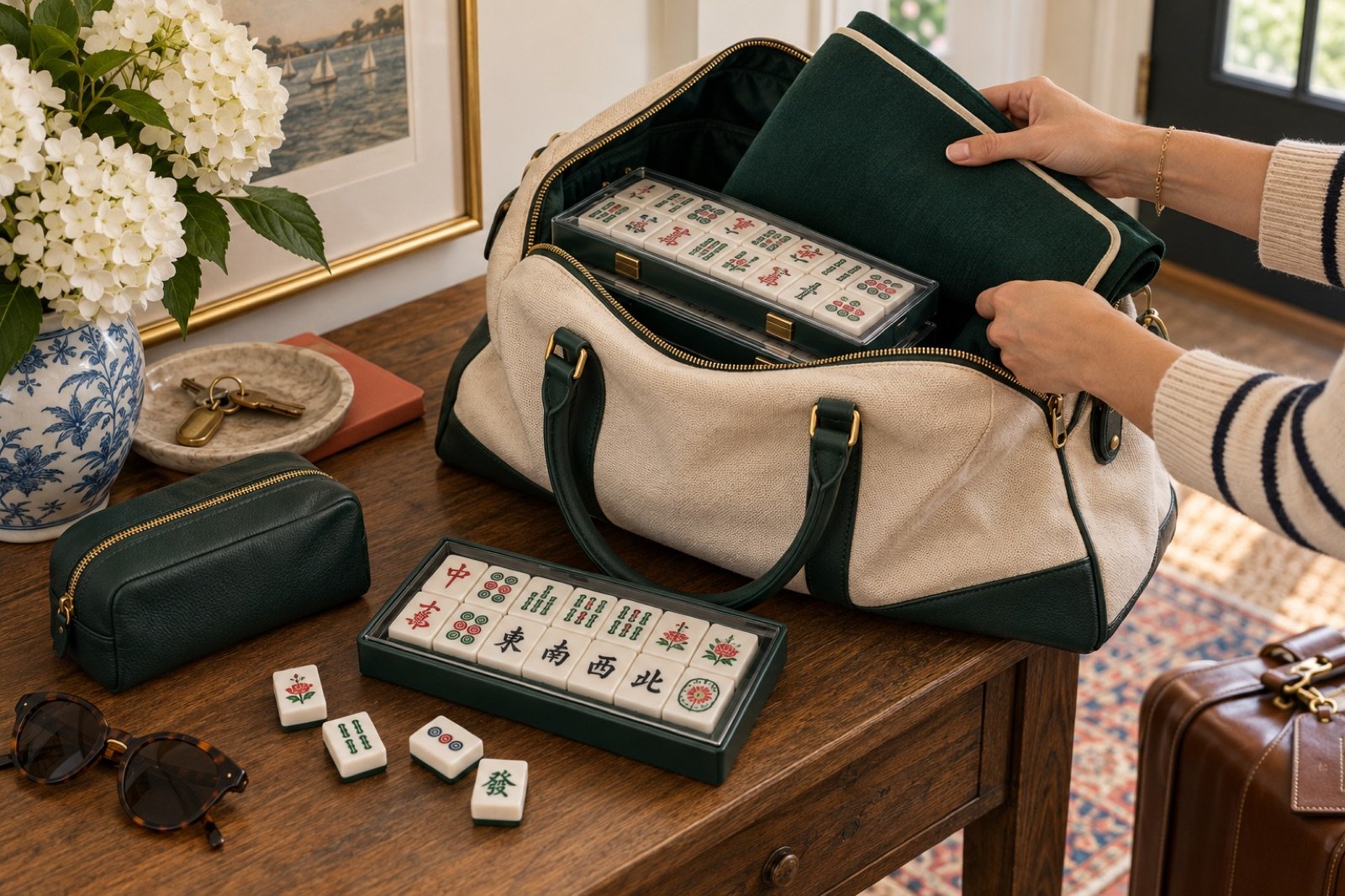
A Mahjong travel bag should be sized around the complete setup, not only the tiles. The right bag holds each component securely without forcing the zipper, bending racks, or letting dense trays slide into softer items.
Measure the closed tile case, longest rack, rolled mat diameter, and accessory pouch. Add a small allowance for padding, then verify the bag's internal dimensions and load rating. External bag dimensions alone can overstate usable space.
Start with an inventory
Lay out everything you expect to bring: tiles, four racks, mat, card, dice, markers, score sheet, pencils, and any teaching aids. Separate required game pieces from optional hosting items. A bag that works for a lesson may need more pockets than a bag used for familiar weekly play.
Count rigid objects first. Tile trays and racks set the shape of the bag; soft items can fill the remaining gaps.
- Tile trays or fitted tile case
- Four racks or rack-and-pusher sets
- Mahjong mat
- Current card and protective sleeve
- Dice, markers, blanks, pencils, and score materials
Measure internal, not external, space
Manufacturer dimensions often describe the outside of a bag. Thick padding, wheel housings, seams, and rounded corners reduce the interior. Ask for internal measurements or test with cardboard templates matching your largest components.
The longest rack usually determines minimum bag length. If racks must sit diagonally, make sure they do not press against the zipper or deform the bag when carried upright.
Control dense weight
Tiles should sit low and close to the handles or shoulder-strap anchors. A loose tile tray at the far end of a bag can make it swing and strain the seams. Use hook-and-loop straps, fitted compartments, or a snug secondary case to prevent movement.
Check the bag's handle stitching and hardware rather than assuming a decorative tote can support a full set. Lift the packed bag at home and walk for several minutes before trusting it on a trip.
Keep the card and mat protected
Store the annual card flat in a rigid sleeve. Do not slide it loose against rack edges. Roll the mat according to its material and keep it away from damp umbrellas or cold drink bottles.
If the mat must travel separately, use a simple mat sleeve and reserve the main bag for tiles and racks. One well-balanced main bag is better than forcing every item into one zipper.
Plan for the return trip
Leave one small empty pocket for receipts, spare zip bags, or a piece that needs separate protection. Take a packing photo so every item returns to the same compartment. A repeatable layout makes it easier to notice a missing rack, dice pouch, or card before you leave.
Frequently asked questions
How large should a Mahjong bag be?
It should exceed the internal dimensions required by your tile case, longest rack, and rolled or folded mat, with a small allowance for padding.
Can a Mahjong mat fit in the same bag as the tiles?
Often yes, especially when it is designed to roll compactly, but the mat should not be sharply folded or crushed by dense tile trays.
What part of a Mahjong set is hardest to pack?
The racks often determine bag length, while the dense tiles determine load strength and balance.
Reviewed for clarity and accuracy in September 2026.