
Journal
How to Clean and Store Acrylic Mahjong Tiles

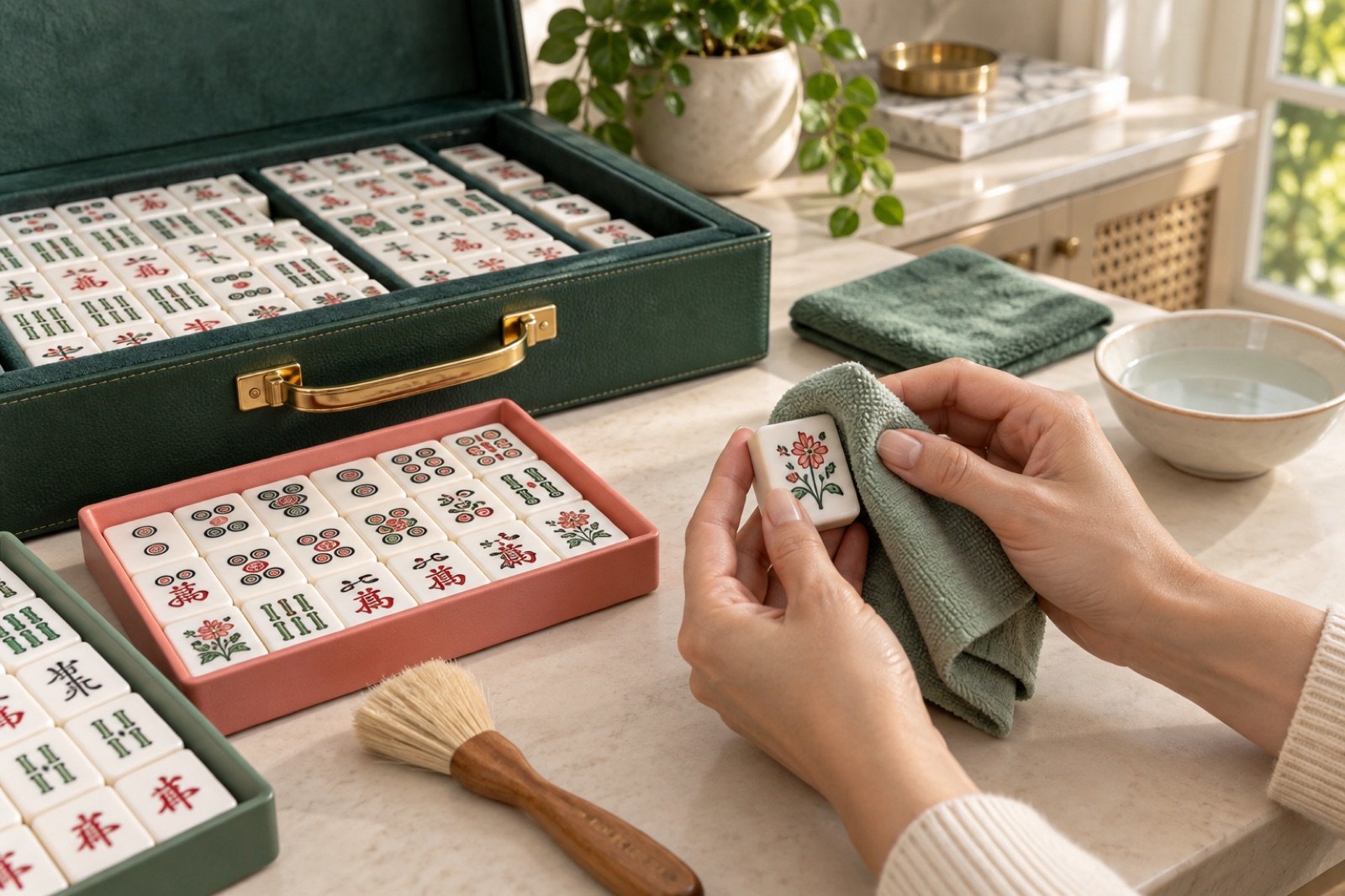
Routine tile care should be gentle. Most dust, fingerprints, and table residue can be removed without soaking, scrubbing, or strong household chemicals that may affect printed details, filled engraving, adhesives, or polished surfaces.
Begin with a clean dry microfiber cloth. If the maker allows damp cleaning, use a barely damp cloth and dry each tile immediately. Avoid soaking, abrasives, solvents, strong sprays, and heat. Store fully dry tiles in clean fitted trays.
Follow the maker first
Acrylic tile construction varies. Symbols may be engraved and filled, printed, laminated, or applied another way. Use the care instructions supplied with the set, especially before introducing water or cleaner.
When instructions are unavailable, test the gentlest method on an inconspicuous spare tile and stop if color transfers or the surface changes.
Use the dry-first method
Wash and dry your hands, clear a padded work surface, and wipe each tile with a clean microfiber cloth. Turn the cloth frequently so grit is lifted away rather than dragged across the face.
Use a soft brush for dust in engraving or tray corners. Do not use a stiff brush on printed details.
Add minimal moisture only when approved
Dampen a second cloth with clean water, wring it thoroughly, and wipe one tile at a time. Follow immediately with a dry cloth. Keep liquid away from bonded seams or decorative inlays unless the manufacturer confirms they are water-safe.
Never soak a tray of tiles to save time. Water can migrate into layered construction and makes it difficult to confirm every piece is dry.
- Clean hands and padded surface
- Dry microfiber cloth
- Soft brush for tray dust
- Barely damp cloth only if approved
- Immediate drying
- Clean fitted storage trays
Avoid common damaging methods
Skip abrasive pads, powdered cleanser, acetone, alcohol unless specifically approved, concentrated essential oils, bleach, and dishwasher heat. Household product labels do not account for tile printing and layered finishes.
Do not polish scratches aggressively. A small cosmetic mark is safer than changing the face thickness or symbol fill.
Store only after a complete check
Count the tiles, make sure every face and edge is dry, clean the trays, and separate the set from metal rack parts. Keep the closed case in a stable interior location away from sun, heaters, damp floors, and heavy luggage.
Frequently asked questions
Can you wash acrylic Mahjong tiles with soap?
Only if the maker approves it. Start with a dry cloth, because soap and water may affect printed or bonded details.
Can Mahjong tiles go in a dishwasher?
No. Heat, detergent, pressure and prolonged water exposure can damage tiles and decorative finishes.
How often should Mahjong tiles be cleaned?
Wipe visible residue after play and perform a careful full-set cleaning when needed rather than using harsh routine treatments.
Reviewed for clarity and accuracy in September 2026.